Showing posts with label fishing basics. Show all posts

Wednesday, June 13, 2018

Lazy but still fishing

Piddling around the new RV and suffering through the Flu has limited my will to blog.  But I am still sucking air and getting out on the water.

It has been a slower than normal season.  Due to on going Irma recovery and wet/windy weather.  Fishing is tending to be ready or famine with lots of predators wanting your catch.

Monday, February 20, 2017

Chum and Live Bait Tips


 If you are serious about reef fishing you know this style of chum net.  Chum bags, small to large mesh are like laundry bags and work fine for shallow water, but for deeper fishing go with a net.  Count on 3-4 blocks of chum per half day with a chum net and 2-3 blocks per half day with a large mesh chum bag.  We got tired of  the nastiness which is used chum nets and decide to put the Pin Fish to work.  David just puts the used chum bag in the bait keep and they clean up the mess.

So if you are planning a larger stay in the Keys, say a week or more in hopes of taken some fish back to wow the back home crowd, let's review some tips.

1.  Having a bait freezer is huge.  Buying chum by the case saves money but you need a dedicated freezer so check you rental for such a goody.  If you don't have a bait freezer, a smaller cooler even one of the cheap Styrofoam ones that will barely hold two blocks of chum can come in handy.  In any case, the smaller cooler is easier to decontaminate if things go wrong.  Put the left over chum in the small cooler and that in a larger cooler with whatever ice you can spare.  Note: the Syrofoam cooler has a very low life expectancy out in the open.  Sheltered in a bigger cooler or below deck fish box at least gives it a chance to be useful.

2.  If your rental has a bait keep, which is a pen of some sort to keep live bait in water at your dock, great, if not remember a cheap 30 gallon trash can with holes drilled in it will do a good job in a pinch.  Don't drill holes in the bottom or the bottom few inches so you can lift the can without stranding the fish.  Use large holes 3/4" to 1" for big baits and plenty of flow.  If you want to keep shrimp in a big bait keep put the shrimp in a mesh chum bag and that in the keep.  Or you can make a smaller 5 gallon keep bucket with shrimps size holes.  I have a drill and bits if one isn't hiding around your place.

3.  Don't overload your bait keep.  Pin Fish are hardy so you can keep several dozen in a 30 gallon keep if the water is fairly clean.  Mullet are dainty little beggars so a half dozen may be all you can get is a 30 gallon keep.  Pilchards are somewhere in between so 3 or 4 dozen in a 30 gallon keep might be pushing your luck in many canals.  Ballyhoo have zero chance in anything other than an Olympic size bait keep.  All live baits can be a PITA so just chill and adjust as needed.

4.  Feeding live baits just enough so they don't start eating each other is a good thing, but don't over do it.  One ballyhoo is enough to keep Pin Fish busy and since they will clean your chum net, let them have fun.

5. Candy size, 1.5 to 3 inch Pin Fish or Pilchards, are your go to Mangrove snapper baits and just about anything will hit them.  Bigger baits might mean bigger fish somethings, but even elephants eat peanuts, so don't knock candy size baits.

Marathon in the Florida Keys should be your next fishing vacation destination. Join us for charter fishing, fishing guide trips or our fishing 101 so you can fish on your own with better success.

Tight lines,

Capt. Dallas

Friday, July 24, 2015

Grunts are Panfish


I don't keep many grunts basically because I am lazy.  Grunts are just a common panfish and with most panfish they tend to taste better cooked whole, like panfish.  Grunts are kinda like the bream of the sea down here.  Off the Atlantic Coast, Croakers and Spots are more popular panfish because they are easy to catch most of the time.

If you are a big time sportsfisherman you might look down grunts and since most folks are lazy like me, you probably don't remember that fish have bones and tend to taste like "fish".  Since most folks now a days are "privileged", which is wealthy and lazy, they tend to shoot for high dollar fish and ignore the pan sized critters that many of us grew up on.  Lots of folks actually look down on panfishermen.  I call call Grunts and other panfish, "Brown Baggers" because I would prefer that customers take their panfish and clean them somewhere other than near my boat.  It takes about 3 times as long to properly clean a panfish and a decade or two to get rid of the scales that tend to go everywhere.  If you are willing to put in the time and effort to clean panfish you are likely to find that they taste pretty damn good.

If you decide to fillet the panfish, you will get a potato chip size fillet that doesn't have much flavor other than whatever breading you used to fry it.  Some people like these tiny fish chips, but filleting panfish tends to less than optimal for others.  Once the fish gets to around 14 inches long depending on the species, it isn't a "panfish" anymore.  Over 14 inches long roughly you can get close to 50% of the weight of the fish in fillet and leave mainly bones on the carcass.  Below 14 inches or so you start leaving more meat than you get off with a fillet.

Growing up I was used to eating panfish and picking the meat off the bone without getting too many bones stuck in my throat very often.  These meals were a rather lengthy get together, similar to picking blue crabs, and almost without fail the fish were breaded and fried.  Once in a great while we would cook a few on the grill which back then was more often just a fire, then we would sit around picking the fish off the bone and typically drinking a beer or two.  I don't recall feeling impoverished or under privileged at the time.  Of course, I wasn't a gourmet panfish cook because I typically cut the heads off before cooking and gave them to the cats.  Real gourmets probably don't have cats.

The problem with cooking them on a grill is that the skin, often a good part of the meal, sticks to the grill.  I found out that if you dry the fish well then coat them with olive oil prior to seasoning, you can not only keep the skin intact you can even burn gourmet looking grill marks that add to the appearance and can make some people think you know what you are doing.  Then you get a nice crisp outside with a moist tender interior that is almost like fish cooked in its own natural stock.  Other than salt and pepper, you don't need anything fancy to mask the taste of the fish because the fish actually tastes good, a lot like fish.

If you happen to be down on vacation and don't have access to a grill or don't care to cook because you are after all on vacation, there are a few restaurants that will cook your catch on the bone.  In nearly all cases you will need to have the fish cleaned ahead of time and you should check with the restaurant to make sure they are willing to do it.  In season, when the places are usual packed, they are less likely to cook your catch whole.  The Seven Mile Grill and Lazy Days South are likely to have no problem especially if you have an extra fish or two for the cooks to sample.  If you check the Lazy Days link you will notice they have the filleted and de-boned clause for cook your catch, so definitely check ahead before dropping of a bag of grunts.  I am sure there are other places, but I have actually seen fried whole fish served at both of these.

Whether panfish served as panfish is your cup of tea or not it is always nice to know your options.
Marathon in the Florida Keys should be your next fishing vacation destination. Join us for charter fishing, fishing guide trips or our fishing 101 so you can fish on your own with better success.

 Tight lines,

 Capt. Dallas

Thursday, July 23, 2015

The Cheap Yellowtail Rods

Today was the first time I got to play with the cheap Yellowtail rods.  We managed to find a decent current and came close to limiting out on 'tails.  In fact we had very few throw backs with a good number of 15 inch fish.  Not stellar by any means but fairly respectable.

The cheap rods did their jobs with no hitches which isn't bad for dirt cheap gear.  The clients were a bit impressed with them and noticed that they didn't need any fancy flourocarbon leader since the cheap reels are spooled with fresh Berkley clear 15 pound test line.  No fuss, no muss, just catch fish.

The boat in the background by the way was part of the two boat guide package today.  That boat seemed to focus more on the grunts and porgies which they like but they did get a few 'tails and one of the 'tails got one of their not so cheap rods.  They sat the rod on the deck for just a moment longer than it should have.

This trip I also was able to catch a net full of Ballyhoo for a change.  It has been a while since I got a cast net wet so that is a good thing.  We only converted one of the Ballyhoo into a Cero Mackerel though.  I am not sure why the Ceros are so finicky this year, but they are.

Marathon in the Florida Keys should be your next fishing vacation destination. Join us for charter fishing, fishing guide trips or our fishing 101 so you can fish on your own with better success.


 Tight lines,

 Capt. Dallas

Tuesday, March 17, 2015

Basic Stuff

I have been planning on reorganizing the blog for about 5 years now.  It'll wait.  I do want to add a few things I recommend in emails to customers.

Gear:  I recommend a 20 pound class spinning outfit with clear mono if possible for most general fishing.  That should have a line capacity of ~200 yards.  15 to 25 pound is fine if that is what you have.

For trolling, bottom, shark etc. I recommend 30 to 60 pound conventional outfits with line capacity greater than 300 yards.  I also recommend clear mono because of the versatility.  

leader material.  30# and 80# monel wire for toothy critters and 15# to 60# mono and/or flouro for not so toothy critters.  

Hooks:  you need a fairly large assortment of sizes from 10 for bait to 7/0 for offshore.  10,4,2,2/0,4/0 and 7/0 are pretty basic in J hooks.  For circles, 7/0 and 11/0 thin wire cover most situations.  Sabiki rigs size 8 or 10 can be useful, but most often single hook bait rigs.

Note that doesn't mention weights.  I use mainly smaller egg sinkers, 1/4 oz to 1 oz on something called a knocker rig.  All that is an egg sinker on the line with a hook sized for the bait.  The eye of the hook needs to be large enough that the egg sinker doesn't slide down the shank.  The lead can slide on the line so that you can let a fish run without feeling the weight very much and once you get the hang of it you can let the bait slide a ways from the lead just like there is a leader.  Note also that clear mono works best with this rig and means less work re-rigging.  If you like making catching more like work, by all means use something more complicated.

Without the weight you have a freeline rig.  That's sports fans, you tie a hook on you line and fish.  This also is much easier with clear mono on your spool.  If you are a braid fan just add a leader about as long as the depth you are fishing.  That sounds like work to me so I use clear mono.

On occasion you may need a little more than just a hook for freelining.  Small pinch weights or very small jig head can come in handy.  On other occasions you might need a short length of thin wire, that would be the 30# or 40# monel which is a type of stainless steel.  For that you need to know a haywire twist and either an Albright, Dog Knot or you can add small barrel swivel.  By small I mean size 10, which is about the smallest I can see to get the line through.  If my eyes were better I would go smaller.  The reason for small is when freelining you want to control the sink rate as you let the line run freely with the current.  Get it?  Run freely with the current aka freelining.  This is so you bait drifts and sinks about the same rate as that expensive chum you have in a landing net size chum bag drifts.  

The landing net chum bag is mainly for deeper water, over 40 foot deep.  If you want to catch fish cheap you can fish shallower and use a smaller mesh bag.  If you want to fish real cheap, stick with the knocker rig and just fish some sexy bottom.

There is a lot of great bottom in the Keys.  One of my main lessons is showing folks how to use their bottom finder so they can tell bottom from sexy bottom.  Sexy bottom has more profiles, that would be ups and downs with more blur, that would be fish and sea fans and hopefully lots of fish suspended off the bottom blur.  If you know your bottom machine real well, you can tell to a point what kind of fish you are marking provided you know a bit about the habits of Keys fish.  

On the rock piles, that would be piles of rock typically in Hawks Channel, in 20 to 20 foot you can have a variety of very high quality eating fish, Snapper, Lanes, Mangrove, Mutton, Yellowtail; Hogfish; Porgies, several flavors; Grouper, Black, Gag and Red mainly; Toro or big Eye snapper which aren't bad; Triggerfish; Grunts if you are into panfish, but don't expect to impress many at the dock with your catch plus the occasional Mackerel, Cero, Spanish or King; Cobia; Permit; Pompano and likely a half dozen more.  Other than that the rockpiles are pretty boring.

On the patches, that would be patches of coral just inside the reef proper in 20 to 30 foot of water, you have the same critters plus a few more like Schoolmaster Snapper to replace the Lanes and pelagic fish that tend to get lost fairly often in the summer.  

On the reef proper, that would be in the 40 to 100 foot range, you pretty much have one stop shopping if you have plenty of chum, a decent current and some patience.  This seems to be my favorite older guy fishing spot.  You don't have to burn much gas and only have to pull the anchor once while you catch plenty for dinner and have a shot at anything up to and including sailfish.  

All of these start with finding that sexy bottom, knowing your current, having fresh and a variety of bait, along with very basic terminal tackle.  As far as bait, fresh is best and live is fresher.  That means you are ahead of the game with a working live well, a cast net and some starter live bait like pinfish, pilchards, shrimp or any number small bait including crabs.  

Catching bait would be my second main lesson.  Sabiki rigs are great for some things but it is hard to beat a single size 10 long shank hook and a pinch weight with a tiny bit of bait.  Squid tentacles make great bait and believe it or not that bag of fake blood worms you never found a use for also work quite well.  I had a bag of those blood worms last me about two years, that is how small you need to cut the bait.  If you remove the pinch weight and add a very small float, you have a balleyhoo rig.  You use that to catch the ballyhoo until they get stupid enough to throw a cast net over.  Stupid ballyhoo are close to the boat and on the surface so you can reach them and when they spook the jump up into the net instead of diving under the net.  

If you go out without bait thinking you will catch plenty, you will probably learn about Murphy's law.  So to avoid Murphy, take some frozen or fresh balleyhoo, shrimp and in a pinch, squid to make sure you are fishing.  

I have my issues with squid other than pinfish bait.  It seems anytime I break out the squid the trash fish come running.  That is probably just me, but I recommend very judicious use of the Calamari.  If you are targeting Yellowtail Snapper and have the big bucks, Silversides aka Spearing are a fantastic bait.  If you are cheap like me, thin bait strips made from balleyhoo or other white bait make a great Silverside imitation.  

In mainly calm weather, rolled oats make a great chum enhancer.  The oats sink more slowly bringing the fish closer to the surface and your boat.  The object of chumming is to bring fish to the boat and out of the bottom where the bigger ones tend to break you off.  The oats are mainly for the Yellowtail which sometimes forget to read my posts.  On an average Yellowtail day they come up pretty quick and you limit out in a couple of hours.  For some folks average means never seeing a 'tail, which is likely due to not finding sexy bottom, not having a decent current, not having fresh bait and/or fishing with too much weight or that wonderful braided line.  

Now I am going to put this post under fishing basics and knocker rig so more people can find it.

Marathon in the Florida Keys should be your next fishing vacation destination. Join us for charter fishing, fishing guide trips or our fishing 101 so you can fish on your own with better success.

 Tight lines,

 Capt. Dallas

Tuesday, December 23, 2014

Know Yo Bait


(305) 304-8656


The new Cell Number

The European pilchard, Sardina pilchardus

While the winds are marginal, my crew in town are waiting till after Christmas for their Fishing adventure.  The weather isn't bad, but taking a day or two to spend with the family is generally good for martial relations.  So while I am doing not on the water stuff I thought I should post some pictures of bait.  The Pilchard aka Scaled Sardine, Spanish Sardine etc. etc. is a prime bait for just about anything.  The larger ones, over four inches are great offshore and the small ones are like snapper candy.  Having a live well full of these guys is serious fishing ammunition.  They can piss off the Pope though.  One day they are a no brainer to catch and the next you can waste most of your fuel for nothing.  So if you are down for a while, it is a good thing to have a bait keep in the water close so you can load up in the good times.  Some of the canals are not all that great for keeping bait especially if there is a lot of dead sea grass floating.  So you might have to locate your keep away from the dock in some sheltered spot hoping that no one wanders off with your keep.  For that reason, you will rarely see a ton of money thrown in making the bait keep to end all bait keeps. In a pinch, a garbage can with lots of holes drilled in it works fine as long as you don't over load it with bait.  Strapping a fun noodle to the top keeps it floating and a bungie will keep the lid in place.


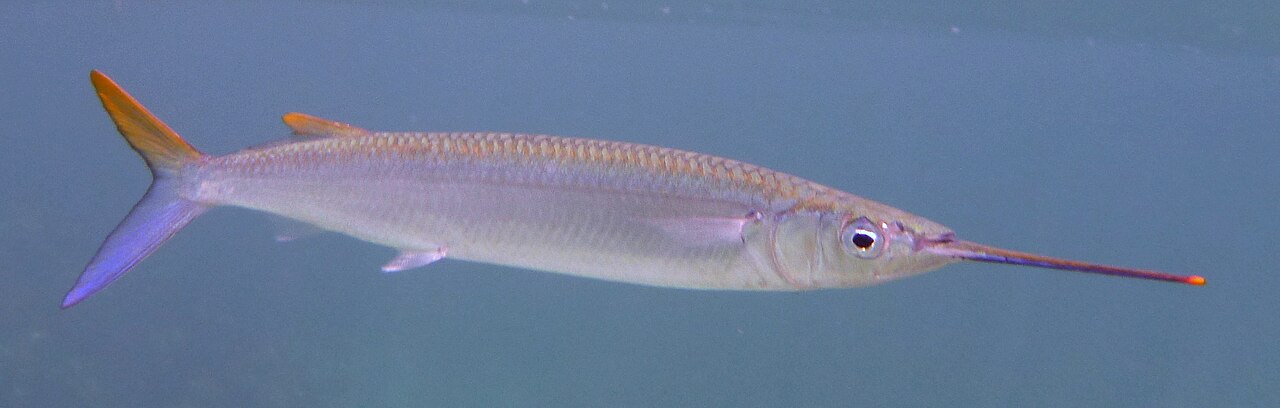
The ballyhoo or ballyHemiramphus brasiliensis

The ballyhoo is another great bait in the Keys alive or dead.  That is a good thing since they tend to prefer the dead state.  You can keep ballyhoo alive in a good live well for about 6 hours if you really watch them.  Just like pilchards they can be a piece of cake to catch one day and non existent the next.  Most of the time they are pretty easy to catch so that is a plus.  While waiting for them to show up in your chum slick, you can add a few menu items like snapper, porgies, hog fish etc. to the box if you pick a good spot.  

These are the two main sailfish baits for the winter season down here.  You can catch both with small hooks, size 10, a small piece of bait just about as big as the gap in the hook and a small float like for fresh water panfish will help especially for the ballyhoo.  Pilchards will also take a Sabiki rig but a cast net is the way to go for both species.

If you can throw an eight foot radius cast net you can throw a 12 footer.  Guides will normally use a 12 foot net.  For the occasional angler a 7 of 8 foot net works just fine. Size does matter but technique is important as well.   A seven foot net with an extra long lease can be just the ticket for spooky ballyhoo.  With just a little practice anyone can wing a net for bait.


pinfish, Lagodon rhomboides

Pinfish are the easiest bait to catch with hook and line or with a trap.  They are more of a challenge with a cast net than you might think, so I normally stick to hook and line.  Pinfish are not the go to bait for sailfish but I have caught a few that didn't read the rules very well.  It is better to have something than nothing, so having a few dozen in the live well is a good thing.

In addition to these basics you can have goggle eyes, threadfin herring, blue runners, small snapper, just about anything that wiggles.  I have caught sailfish on all of them.

The reason for this post is a lot of my trips are devoted more to bait catching instead of fishing.  Catching bait is a fishing basic and I am a basic kind of guy.  It makes it easier if you know what you are looking for.

Marathon in the Florida Keys should be your next fishing vacation destination. Join us for charter fishing, fishing guide trips or our fishing 101 so you can fish on your own with better success. 

 Tight lines,

 Capt. Dallas

Tuesday, September 13, 2011

Yellow Tail Snapper Fishing Techniques: An Over View.

I am revising my Yellowtail post for the guys on the Florida Sportsman Fishing Forum. Like many a good thing, the FSFF under went some changes not for the better. A lot of valuable information was lost when the forum changed its format or software or whatever. Anyway, a once great fishing forum got nearly destroyed. In the Florida Keys General category, there is a FAQ post with plenty of great links to great information that no longer work, bummer. One of those was on yellow tail snapper fishing.

What we call yellowtail fishing is anchored chum fishing on the reef using a free line technique. The chum melts out of the chum bag and drifts with the current. The free line method is to drop your bait in the water by the chum and let it drift with the chum. So rule 1 is if the bail is closed or you are holding your line to feel the bite, you are not free lining. As we say in the South, "I don't care how you do it up North, you ain't up North." So the two basics of yellowtail fishing on the reef is chum and free lining.

Now things can change depending who you are fishing with. I tend to be frugal. That is another word for cheap. Chum costs money, so I prefer to catch the most fish with the least amount of chum since I can only keep so many fish. A commercial snapper fisherman wants to pay the rent so since they don't have to stop at ten fish per person they use lots and lots of chum. It's a profit thing.

To be a frugal snapper fisherman, shallower water is where you can catch more fish with less chum. Shallow water generally means smaller fish, but not always. Commercial snapper fishing with lots of chum is normally done in deeper water where the fish are generally bigger, but not always. It is the not always that makes things interesting or hard on the wallet.

30 to 70 feet is the frugal fishing depth with 70 to 100 the commercial depth. This is of course general. I know quite a few commercial guys that fish the 45 to 60 range looking for 16 to 20 inch fish. Not flags by any means, but there is a good market for them. I tend to prefer the 14 to 18 inch fish in the shallower water for the first part of my bag limit then try to be a hero after some of the pressure is off. If I have a regular crew that knows the ropes, then we mix it up a bit.

Trained Fish: After fishing the same spots for years, the fish seem to recognize me and pop up to say hello before I even start chumming. Unlike most honey holes where you want to guard you numbers with your life, some yellowtail spots are better shared to keep the fish happy or trained if you prefer. So if you stop into a tackle shop on vacation they will likely give you some decent numbers for a yellowtail. This can lead to a little predicament since there is likely a boat on the spot when you get there. Since they are chum fishing, don't get close to their chum slick. If you do a single finger wave is likely. Sometimes they take it real personal. Most of the yellow tail spots though are not little structure areas, they are large coral fields. So several boats can fish the area if they work together by not getting too close or anchoring up or down current of each other. On these trained spots you can limit out in less than two hours most of the time. Giving other boats about 200 yard space is generally good manners in Marathon for 'tailing. In the Tortugas, two miles is a good gap. I don't like fishing up other people's butts nor do I like them fishing up mine, but it is tolerated for yellowtail fishing on "public" numbers. Public is important. If you know that everyone and his brother knows the numbers, you are welcome to join the fun. If you just want to steal some numbers, things can get pretty testy. So use your best judgement.

Patience Pays: Most of my customers want to have a bait in the water from the time they leave the dock until they get back. For yellowtailing it is better to let the chum do its job and get the fish up before putting a free line in the water. In shallow water that may be just a few minutes or in deep water that may be 20 minutes. When the time to catch begins, try to work like a team. Sometimes one or two lines in the water at a time is more productive. Some times three or four lines started at the same time is more productive. Five or six lines at a time with four or five of them getting tangled is generally least productive. As a fishing consultant on your boat or rental boat, my job is to teach, and people learn from their mistakes so I am perfectly happy to let you learn from your mistakes if you prefer to not listen to me.

Tackle: I definitely recommend a spinning rod for yellow tail. The line comes off the spool much smoother with less effort. You can use a baitcaster, but it requires a lot more attention and tends to be backlashed when a big mackerel crashes the yellowtail party. Hook size ranges from size 4 for a slow bite to 2/0 for a killer flag bite. Bait size varies with the hook size. Leader material is not required if you have new or clean clear monofilament line. In very clear water with spooky fish, flourocarbon can make a big difference, so I always carry 12 pound flouro. Most of the time no weight is required. Small pinch weights, size seven and smaller are useful if you line does want to flow off the reel right. Some people prefer to use small 1/8 ounce jigs or smaller with yellow a popular color. If something works for you stick with it until someone else starts showing you up. I normally will use a barrel swivel about five feet from the hook if I need weight. It also helps cut down on line twist where there aren't enough mackerel in the area.

Snapper Don't Like Wire: Speaking of mackerel. If you get tired of them cutting your hooks off, you can use a light wire leader, number 2 to number 4 about 6 inches long to catch these guys. You will probably find that since you are ready for mackerel, that you start catching yellowtails. Fish love to make a liar out of people, so don't believe everything you hear, sometimes wire works like magic.

Flag Fishing: Flag yellowtail are fish over 20 inches or close to three pounds. For their size, yellowtail are pretty good scrappers. So flags can be a challenge. With a good flag bite you will need fifteen pound line minimum with twenty a good idea unless loosing fish is not big deal to you. Flags take off for the bottom as soon as they feel the hook so you will need a heavier drag setting than normal, about 50% of line test. The heavier line and the heavier drag setting means larger or stronger hooks. Size 2 to 2/0 depending on things.

Bait: Fresh is best. Yellowtail are not all that finicky. They will eat nearly anything. Some baits are better though. Fresh ballyhoo fillets are great. You can cut them into just about any size you like. You can get all fancy and stuff a little chum in a roll of fillet. You can also catch fresh ballyhoo most to the time you have a chum slick going. Silver side minnows are also a great bait. They are in the right size range, the right shape and they smell like fish. Since they are small fish, you don't have to slice them up. Just stick one or two on a hook and get to fishing. Fresh pilchard are a great bait alive or dead. You will probably have to cut some down to size, but if you have the two to three inch pilchards, just stick 'em on the hook. In the winter, it is a good idea to have live shrimp. Not that you need them for yellowtail, they just can increase the variety of fish that take you line for a ride. Squid is the bait of last resort in my opinion, messy and smelly, but it does work. Size is the thing with the baits. try 1 1/2" to 2 inch strips and adjust as needed.

Chum: There are quite a few "secret" recipes. I know one guy that cooks elbow macaroni for his chum bag. Others have a blend of ground bait fish, menhaden normally, rolled oats, Purina Shrimp Chow, dry dog food, dry cat food and/or anything they may have read about. Ground baitfish, menhaden or sardines, works fine with some oats not a bad idea.

Chum Bag: Small mesh bay, medium mesh channel and landing net deep. With a small mesh bag a 7 pound block of chum will last nearly three hours. With a medium mesh a 7 pound block will last about an hour. With a landing net mesh bag, a seven pound block of chum is nearly a waste of time, get the 25 pound block. At a buck a pound average, you can figure out how long you want to fish and how much you are willing to pay for snapper.

The Bite: If you are free lining properly you may never feel a bite. You will just see the line start to peal off faster or sometimes slow down. When it does, just close your bail and reel. Nothing to it. Anytime you close your bail, you may as well reel in and check your bait. The 'tails will almost always bite while the line is drifting with the chum. They only bite with the bail set to make me look like a liar.

Starting The Drift: No casting is generally required, just drop the line in the water and let it go. If you have birds or trash fish bothering you, casting may help. Some like to shake the bag at the start of the drift. Fishing shallow with a medium mesh bag that is not a bad idea, neither is a splash of oats with your bait. Watch the fish to see what works best. Deep water fishing you should have a steady chum flow, so no shaking required.

Conditions: Wind with the current is best. If the chum is flowing out of the back of the boat things are looking good. If the chum is flowing up the anchor line, things will be slow. If the chum is falling straight to the bottom, no current, things can be interesting. I catch most of my hogfish and larger porgies with no current, but most of the time the 'tail bite is very slow. Cloudy water normally means a better bite with shallower better than normal. Crystal clear water normally means a slower bite with deeper water better.

One of the great things about yellowtail fishing in the Keys is all the other critters that may show up in the slick. Have a rod ready to pitch a big bait to a big fish. Having a bottom rod down with a big live bait is also a good idea. The main thing is to take advantage of the opportunities that present themselves.

Marathon in the Florida Keys should be your next fishing vacation destination. Join us for charter fishing, fishing guide trips or our fishing 101 so you can fish on your own with better success.

Tight lines,

Capt. Dallas

Monday, September 27, 2010

Catching Live Bait

As the water temperatures cool lots of things are going to start happening here in the Keys.  The first thing is that lots of different kinds of bait fish will move down here to get out of the cold water.  Scaled sardines (we call them pilchards), thread fin herring, and ballyhoo will come down to the Keys in large numbers for their winter vacation.  The schools of bait are so large that artificial lures have a tough time competing with the natural baits that are so abundant.  So to really have a kick butt fishing trip you need the livies.

Every year I have a post were I try to beat it into the tourista's heads the need for and how to catch live bait.  This year I am going to hammer home the need for and how to throw a real castnet.

First thing, what is a real castnet?  A real castnet is an 8 foot or larger radius net.  In case y'all don't know what a radius is, it is the distance from the lead line of the net to the center or horn of the net.  So an eight foot net has a diameter of 16 feet.  I personally throw a ten foot net and most charter captains throw a 12 foot net.  The reason I throw a smaller ten foot net is because I fish all kinds of boats, most of which are smaller and generally overloaded with crap limiting the room I have to throw.  Most charter captains throw a 12 foot net because they are fishing their own boat and they are real anal about telling you to keep your crap out of their way so they have plenty of room to throw the larger net.

I also throw a cheap net because many of the boats I fish have net rippers like backing out rub rail screws, cracked fiberglass and other stuff that will rip a hole in my net.  Most charter captains throw high dollar nets because they have made sure their boat does not have net rippers.

The biggest difference between the cheap net and the high dollar net is the mesh of the net.  The cheap net's mesh is stiffer and has a lot of memory.  The high dollar net mesh is silky smooth and has very little memory.  Just look at the price difference between the top of the line monofilament and the bottom of the barrel Walmart brand.

Learning to throw a net is a lot like learning to ride a bike.  The first time or two you try you will freak out and do something stupid and everybody watching will get a nice chuckle at your expense.  Well man up!  Did you quit trying to ride a bike because Jennifer across the street laughed and called you a spaz when you crashed into the rose bushes?  No you took a Mercurochrome bath and practiced in the backyard until you could proudly ride down the street and flip Jenny, the ninny off. ( deja vu all over again. Maybe I should have picked another comparison.)

Anyway, there are several ways to load and throw a net.  I use the dry load method because I hate getting wet the first thing in the morning and freezing my butt off running to the fishing spot.  Since I am too cheap to by a video camera I am sticking a video link to another captain showing how to throw a cast net with the dry load method.  Pay attention to how he coils the line and the net in the outside to inside roll.  Also note that he uses the net's momentum to make the throw not only easy but look easy.  You not only want to catch bait you also want to look cool doing it just in case Jenny shows up in her boat with her new race car driver boy friend.

Here is the link to the video.   http://www.youtube.com/watch?v=lOUkj2h2LjI

Now go into the backyard and practice.

Marathon in the Florida Keys should be your next fishing vacation destination. Join us for charter fishing, fishing guide trips or our fishing 101 so you can fish on your own with better success.

Tight lines,

Capt. Dallas

Sunday, December 13, 2009

Fishing Guides What They Do?

They are different kinds of fishing guides in the Keys and elsewhere. Some specialize in types of fishing like back country, fly fishing, flats fishing, bridge fishing, bottom fishing et cetera. Some do a little bit of everything. I am one of the little bit of everything variety. Some parts I am very good at and some I know enough to help most anglers. Fly fishing about my worst area and I still have repeat customers that show up every year to add a new species to their list. I generally avoid tarpon fishing unless there is a really hot morning or afternoon bite.

My main thing as most know is teaching the basics of fishing in the Keys. From how to throw a cast net to how to catch sailfish. Since my trips normally don't include boat scrubbing or much of my own gear my rates are lower than most. In other words it is kinda of like fishing with your buddies instead of having paid mate to do everything. There are guys to do do the hired mate thing so they charge more.

I recently met a captain in Islamorada that does the hired mate thing that wants me to fish a few of his trips this year. So the rates for his trip will be variable depending on what the customer wants.

My current rate is $175 a day though I do give repeat customers some slack. The full bells and whistles guide trips will be $300 a day if you prefer to watch me load the boat, bait your hook, clean the boat clean the fish and everything else involved in a normal trip. So that leaves some room for dickering.

My type of guide service is best for guys that are new to the Florida Keys fishing experience and have their own boat and gear, are down for a few days or longer serious fishing vacation. The other is best for guys just planning a one day trip and don't know much about fishing in general or are just squeamish about dealing with bait and fish. Now don't get me wrong I am full service for the ladies and kids that need help on my regular trips.

Marathon in the Florida Keys should be your next fishing vacation destination. Join us for charter fishing, fishing guide trips or our fishing 101 so you can fish on your own with better success.

Tight lines,

Capt. Dallas

Saturday, April 11, 2009

A Little Yellowtail Snapper Tip Before I fish Today

April and May is a great time to fish for just about everything in the Florida Keys. Right now the Sailfish are pouring through and the big Dolphin are offshore. Tarpon are at the bridges, but there is just something addictive about yellowtail snapper fishing. 'Tailing requires chum that costs money and has to be stored frozen.

To save money and time it is best to buy chum in bulk. So see if the place you are staying has freezer space available. If you have enough freezer space you can save about 12 bucks a trip on chum. The average price for good quality chum is 7 dollars per 7 pound block bought individually. At Ore Seafood, you can get a case of 8 blocks of sardine chum for 32 bucks. If you have a place to freeze the chum a good day of tailing only costs 16 dollars for chum instead of 28 bucks. If you don't have a freezer you are better off buying chum by the block.

Another tip is a good bait cooler. Brining your bait keeps them fresher longer than just putting them on ice. Add a cup or two of salt to the ice in your bait cooler to keep the silver sides or ballyhoo to keep them happy.

If you really want to get dinner quick and cheap think shallow. 'Tailing in 30 to 40 feet produces good size 'tails (14 to 18 inches) with less chum and time than the deeper water. Going for the flags in water over 60 feet takes about twice as much chum for half the number of fish. Granted, the fish can be flags over 20 inches, but you will lose a lot to the bottom and predators.

Marathon in the Florida Keys should be your next fishing vacation destination. Join us for charter fishing, fishing guide trips or our fishing 101 so you can fish on your own with better success.

Tight lines,

Capt. Dallas

Wednesday, March 18, 2009

Kid Trips

I kinda hate posting these trips because the big game guys are't impressed. But I have had a few pretty short anglers the last two days. Eight to ten year old kids. So nothing that will blow wind up your skirts, but happy kids. Just a part of life guys, put the kids on fish, don't worry about size and don't freak them out so the never want to fish saltwater again.

The kids had a ball. The catch was less than impressive. Job one though is to make sure the kids had a fun trip. I did that and still caught dinner. Fishing younger kids is tough for many captains. I enjoy teaching them how to cast and how to fight fish. It is kinda cool that they listen while dad normally doesn't.

Nate, my junior angler today, is a much improved caster and caught fish. He learned not to wind against the drag and acquitted himself quite well as a salt water fisherman.

Marathon in the Florida Keys should be your next fishing vacation destination. Join us for charter fishing, fishing guide trips or our fishing 101 so you can fish on your own with better success.

Tight lines,

Capt. Dallas

Thursday, March 12, 2009

Night Time Is the Right Time


I did a quick interview with Captain Jeff Knapp of Beckoning Charters. Jeff's specialty is night tarpon trips. The reason I interviewed Jeff is because I fish in the day and drink at night. So for night fishing techniques who better to go to than Count Knappula.

The gear Jeff uses are 25# spinning outfits and 40# conventional outfits. Jeff doesn't endorse products unless the manufacturer gives them to him. He does have one exception. His conventional reels are Shimano TLD 20s.

His line choice is Ande Envy. He likes Envy because it has no memory and glows in the spotlight. You lose a little chafe protection because it is so soft, but the other advantages more than make up for that. Rigging is about five feet of double line made using a Bimini Twist. Leader he said should be as long as the fish size you are targeting. The length and strength of his leader material changes with the fish showing. In the early season the fish are smaller so five to six feet of 40# leader is normal early in the year. As the big girls start showing, Jeff moves up to 80# or 100# material with eight to ten foot length.

Baits also vary with the season. Pinfish are good all season long but tend to work much better in February and early March and then again in May to the end of the season. Mullet are best from the second week of April to the end of May or when the water warm up. Crabs are best in the deep warmer water after May.

For artificial lures the Bomber Long A is Captain Knapps favorite. He modifies the Long A lure by removing the center hook and replacing the front and rear hook with Size 1 VMC or red coated Penn trebles. He works these lures very slowly, often just letting them swim in the current with the rod in the rod holder. The lures are most effective just outside of the bridge shadow when there is a bright enough moon.

Lure colors change with light conditions. Natural colors are best on a bright moon. Pink has the edge just before or just after dark. Chartreuse works well in low light conditions. When sight casting a lure or natural bait to a group of tarpon do not cast into the middle of them. Try to place your bait about five feet outside the group to avoid spooking them.

Which tide is best depends on water temperature and available bait. Early in the season, February through about the second week of April, the incoming tide is the ticket. With warmer water, the outgoing is the better producer.

Because you will have to chase fish fast to keep them from fouling your line on bridge piers use a cut away anchor with ball float to allow you to get after fish fast. If you don't have a anchor ball don't be surprised if a local captain tosses you a Clorox bottle.

Boating etiquette is important especially during night tarpon fishing. When heading out or back stay up current of the boats fishing to avoid spooking fish. Idle speed near boats fishing is of course always appreciated.

"The difference between night and day tarpon fishing is night and day", Captain Jeff Knapp. His biggest fish weighed in at 185 pounds and the most fish in a single night was seventeen.

Captain Jeff Knapp fishes out of Captain Pips Marina mile marker 47.5 and be can be reached by calling (305) 849-0548 or check him out online at www.captainjeffknapp.iwarp.com.

Captain Knapp has a variety of trips to suit your budget. $250 for a two hour trip, $350 for a three hour, $400 for a four hour and $450 for a five hour. Mention that you heard about him from my blog and he won't charge you much more.

Marathon in the Florida Keys should be your next fishing vacation destination. Join us for charter fishing, fishing guide trips or our fishing 101 so you can fish on your own with better success.

Tight lines,

Capt. Dallas

Monday, March 09, 2009

General Non sense but a grouper update.

I had to go to Key Weird today to get my TWIC card. Pain in the butt, but I did see a few guys I haven't seen in a while. I timed the trip perfect for some fresh fried gizzards at Dion's in Big Pine.

When I got back to Marathon a crew that I took out five or six years ago were singing the blues about not catching. They wanted Grouper and big snapper. So I am going to do a quickie for fishing basics.

There are a few wrecks that grouper have not been over harvested in the Marathon area. There is no way in hell I am giving you those numbers. Honey holes are what save my butt from time to time and I would be stupid to give my numbers to the masses.

I do teach how to find your own honey holes. Generally, when you fish for long lived species like Grouper, you need to find a place less fished by man. So instead of fishing a Top Spots number, just take a look at how it looks on the bottom machine. Throw a plug out to troll and search for similar bottom structure and give it a shot. Then if you are smart, take one keeper and move on to another.

The Middle Keys bottom fishing gets a lot of pressure. If you take all the brood fish off a spot it may take years to rebuild. Hunt and peck may be more work, but it produces and will continue to produce in the future.

Marathon in the Florida Keys should be your next fishing vacation destination. Join us for charter fishing, fishing guide trips or our fishing 101 so you can fish on your own with better success.

Tight lines,

Capt. Dallas

Thursday, February 26, 2009

Dealing with Sea Birds Stealing Your Bait and Getting Hooked or Tangled


If you fish in the Keys sooner or later you either hook or get a sea bird wrapped up in your line. Kelly Grinter, of the Marathon Wild Bird Center, consented to a short interview this morning to explain how to handle sea birds while fishing. When you hook a pelican or seagull just reel them in slowly and get control of them so you can remove the hook. Pelicans have large bills that make a perfect handle for holding them. Just grab and hold the top beak or both and gentlely control the bird.

Seagulls have smaller beaks but are handled much the same way. The first thing a seagull will do is try to bite you when you reel them in close. Just extend your finger and let gull bite then grab the top beak between your thumb and finger.

Once you have control of the bird remove the hook and unwrap and remove any fishing line. If the hook is buried to the barb, you may need to push the hook through and snip the barb off to get the hook out. Then release the bird. If the bird was hooked in the leg, it may need antibiotic treatment to prevent infection. In that case, give your local wild bird rescue center a call for more instructions.

In the photo Kelly has just removed a jig head from a juvenile pelican. She calls pelicans that hang out around the dock moochers because they are always looking for a hand out. While feeding these birds can be fun, it is one of the worst things you can do for them. Kelly said these pelicans are like 16 year olds that want a beer, they don't need to have a beer, but someone will give them a beer. So feeding pelicans is like giving alcohol to a minor, not a good thing.

Pelicans have eyes much larger than their stomachs. They will eat fish that are much too large for them to digest often ending up in trouble. So when you are cleaning fish make sure that the pelicans don't get to your fish or the carcasses. To my surprise, you may need to start watching out for your fillet knives as well.

"I got a call from one of the captains at Keys Fisheries that a pelican had swallowed his fillet knife. I drove down there knowing that could never have happened. The captain showed me the bird. When I reached my hand down its throat, sure enough there was the fillet knife," said Kelly.

So when you are fishing in the Keys watch out for the sea birds, especially the brown headed, juvenile pelicans. They are not the sharpest tacks in the box.

For more information on the Marathon Wild Bird Center follow this link, marathonwildbird.org


Marathon in the Florida Keys should be your next fishing vacation destination. Join us for charter fishing, fishing guide trips or our fishing 101 so you can fish on your own with better success.

Tight lines,

Capt. Dallas

Wednesday, February 25, 2009

Have Your Ground Tackle Ready for the Job

The reef bite has been slow so I tried to fish the Hawk Channel rock piles to get the eating fish. Only one problem with that plan, both the Danforth and the rock anchors were tweaked. If you can't hold anchor where you want you are not going to catch the fish you want. Many private boat guides like myself have a variety of anchors and anchoring methods to get the job done. They only work if your gear is in working order. So here are a few tips for anchoring in the Keys.

Make sure you have the right Danforth. Yachting is one thing, but for fishing you want an anchor over-sized for your boat. Yep, it is a bit of a pain to pull in, but you want something that will hold in high winds and not break loose in confused seas. The Danforth is for sandy and grassy bottom only. So that means that it is for fishing the Bay and Hawk Channel. The Danforth we had was the right size, but had been tweaked on a previous trip so it could not get a good bite.

Depending on the conditions you want plenty of scope. In twenty plus knot winds 10 to one scope is not uncommon. Scope by the way in the amount of line out for the depth of water. So that means you need plenty of anchor line.

On the reef you want a grappling hook also known as a rock anchor. Preferably one with a break away so you can retrieve your ground tackle from a rocky coral hook-up. Today the rock anchor had four of its five hooks bent.

In really strong winds I have to resort to using both anchors on the same line just to hold. By tagging the Danforth to the back of the rock anchor you can hold in the Bay in nearly any wind you are silly enough to fish.

Normally, I check this stuff before I head out, but I was fishing with a friend that normally has top notch stuff. So I got a not so subtle reminder to never assume. Always make sure your ground tackle is up to the task and never forget to bring a back-up.

Marathon in the Florida Keys should be your next fishing vacation destination. Join us for charter fishing, fishing guide trips or our fishing 101 so you can fish on your own with better success.

Tight lines,

Capt. Dallas

Saturday, January 10, 2009

Double Line and Leader using the Spider Hitch and Noname Knots

Here is a video by another captain showing how to tie the Spider Hitch.


The video did not show the Hitch being lubricated before tightening. That is important to get the maximum knot strength. Watch closely how the small loop is formed and the direction the main loop is passed through the small loop. Five wraps is my recommendation, though for light lines (under 15 pounds) six is a good idea. There is some dispute over the strength of the knot since some people use four or even three wraps. With five wraps, well lubricated and very tightly snugged, my tests came out to nearly 96% of the main line. Of course I didn't have any fancy testing equipment, just a spring scale and my eyeballs.

Now the only reason I tie a Spider Hitch is to allow me to tie a heavier leader to the double line. The knot I use for that is the Bristol or Noname Knot. I may have to make my own diagram for the Bristol Knot I tie because it is a little different than the standard and a little easier to tie. Check back later.


Okay, the diagram is pretty crappy, but will have to do for now. The loop of the double line is pretty clear. The leader line requires a little explanation. From the left, the first hump is the leader line coming up through and back down through the double line. I use my left thumb to hold that loop in place. The next seven humps are wraps around the double line then the tag end of the leader goes through the loop held in place by my thumb. Holding the tag end and the leader draw the knot snug after lubrication. Finish by tugging the leader tight and then the tag end tight. Clip the tag end close to the finished knot.

The length of the leader and double line depends on what you are doing. For spinning rods and casting, I limit the double line to five feet and the leader to about six feet. For trolling I extend the leader to 10 to 15 feet.

Marathon in the Florida Keys should be your next fishing vacation destination. Join us for charter fishing, fishing guide trips or our fishing 101 so you can fish on your own with better success.

Tight lines,

Capt. Dallas
Sunday, January 04, 2009

Fishing the Florida Keys Fishing Tips: My Knots


I teach a lot of people to fish here in the Keys. Since most are new to saltwater fishing I keep it simple and teach basic stuff that works. There are a good number of repeat customers that I teach the more advanced stuff. Even the more advanced techniques I try to keep simple. The way I do things often varies from the way other captains do things, but there is a method to my madness.

Knots to know: The Uni-knot, Spider Hitch, Haywire Twist and Bristol or No Name knot.

With that short list of knots you can tie any rig or leader system for any type of fishing in the world. Actually, the uni-knot alone can do almost everything, it is the most versatile fishing knot ever invented. Most captains have no problem with the uni-knot but a few do. So the reason I prefer the Uni is its versatility and its 98% break strength. There are 100% knots that many captains prefer so here is why I would rather use a weaker knot. I know where the line will break.

Imagine hooking a huge fish and getting spooled. That is a regular occurrence here in the Keys. The uni-knot will break when you run out of line so you don’t lose your whole spool. That’s a good thing for you but a better thing for the fish you lost. A fish dragging a few hundred yards of line probably is going to die. That’s bad. Those fish that whip your butt are valuable. They bring people back for a potential rematch.

The Spider Hitch is used for the same reason as the Uni-knot. It is a 96% strength knot used to make a double line. Most captains prefer a Bimini Twist that is 100% strength for making double lines. I like knowing where the line is going to break for the fish and my wallet’s sake. Another reason I don’t use the Bimini Twist for everyday fishing is the size if the knot. There are a lot of small fish with sharp teeth in the Keys. They will often mistake the Bimini Twist for a small minnow and cut you off. The small size of the Spider Hitch saves you money by reducing lost trolling lures. The Spider Hitch also is less likely to catch on the spool when casting and goes through the rod guides more freely.

The Bristol or No Name knot is a leader to double line knot. It is a good knot used by many captains so I don’t get much argument here. Same with the Haywire Twist, which is the most common solid wire knot used in the world.

Some captains question the way I use these knots. For example, my leaders on spinning rods are a lot shorter than most captains use. I use about five feet of double line and about six feet of leader. The shorter double line/leader makes it easier for my customers to cast. Since I don’t have a mate to blame I want to make it easy for my customers . Also the shorter leader is fish friendly for the ones that get away. My wire leaders are also shorter than most for the same reason.

My next post will be about how to tie these knots and different rigs I use in the Keys.

Marathon in the Florida Keys should be your next fishing vacation destination. Join us for charter fishing, fishing guide trips or our fishing 101 so you can fish on your own with better success.

Tight lines,

Capt. Dallas

Saturday, January 03, 2009

When Nature Calls

Marine heads or toilets are not built like your home facilities. To maintain the respect of your captain and crew learning the subtle differences in procedure is a must. Following a crisis of epic proportion I wrote the following article.

The Art of Butt Wiping: Hiney Hygiene
One of the biggest parts of proper hiney hygiene is the etiquette of maintaining the integrity of the throne. Following these basic tips will endear your with the community.
Read more

Enjoy

Marathon in the Florida Keys should be your next fishing vacation destination. Join us for charter fishing, fishing guide trips or our fishing 101 so you can fish on your own with better success.

Tight lines,

Capt. Dallas

Tuesday, September 23, 2008

The Pilchards are here!


The Pilchards are here! The Pilchards are here! I am always harping on your bait makes your trip. Pilchards are the best all around bait in the Keys. Now that they are showing up things will bust loose down here. Sailfish, Cobia and the Mackerel will start getting thick feeding on these tasty white baits.

Pilchards can be caught hook and line with Sabiki rigs, but the best way is to use a cast net. If you don't know how to throw a cast net it's about time your learned. I or captain Jeff pictured will be glad to show you how.

I know money's tight right now. If you are Jonesing for a fishing trip keep checking my blog and I will let you know when you can get the best bang for your buck.

Marathon in the Florida Keys should be your next fishing vacation destination. Join us for charter fishing, fishing guide trips or our fishing 101 so you can fish on your own with better success.

Tight lines,

Capt. Dallas

By the way I have added another charter to the list. Capt. Bo Sellers with Shallow Minded Charters. He does flats and backcountry in the lower Keys. Nice guy, check him out.

Wednesday, September 03, 2008

Yellowtail Fishing Techniques


Fishing for yellowtail snapper on the reef is probably the most popular type of fishing in the Florida Keys. They are good eating, generally easy to catch and you never know what else will show up to make things exciting.

While fishing for 'tails I have caught Grouper, Mutton Snapper, King Mackerel, Cero Mackerel, Hogfish, Dolphin, Cobia, Sailfish, Tuna, Amberjack, Wahoo and even had a shot at a 200 plus pound Yellowfin Tuna. So don't underestimate the potential of a little Yellowtail fishing trip.

The by-catch pictured above are common though the size of the Amberjack is a bit bigger than average. The 75 pound Amberjack for example ate a twenty inch 'tail right behind the boat and was landed on a twenty pound yellowtail rod with a size 2 yellowtail hook. Hogfish are mainly caught with shrimp on the bottom in sand patches around heads.

There is a good post on the Florida Sportsman Fishing Forum here. This link is broken due to changes at FSFF. I will try to fix it asap. Later today I will start picking out some of the more interesting points and compare them with my post on Yellowtail fishing. So stay tuned.

ETA. Bait size depends on the conditions. Slower currents with clear water generally means smaller baits, but I will mix it up a bit to see what they want. I generally start with 3/4" strips or whole Silverside minnows. When I have small Pichard sardines alive or dead I will try them whole from time to time. This is mainly to pick up muttons or big Mangroves, but flag Yellowtails like them too. If there are a lot of mackerel in the area smaller baits help reduce mackerel cut offs

Flourocarbon leaders is never a bad thing. A whole reel spooled with Flourocarbon tends to not be that good. I don't know why, but Flouro tends to be prone to nicks at least when freeline fishing for 'tails. I don't start with the long Flouro leader. Three feet is plenty unless you are fishing trained fish. I like dumb fish because they make me look smarter and reduce rigging. Still you have to be ready to adjust to the bite.

Heavy chumming to start and putting around the area chumming before anchoring are good ideas. To make it easier I leave a box or two of chum out of the cooler to partially thaw on the way out. The big mesh bag is a must in deeper water and a good idea any time. A smaller mesh bag can work just fine in shallower water at a trained spot. I do tend to use less chum than most unless I am targeting flag 'tails. By targeting 17" to 20" average 'tails you can use less chum and still have a fine catch.

The soaked rolled oats trick can work wonders. It can be a bit messy so I avoid it and sand balling whenever I can. To do that I will often fish coral heads that have had less pressure so the fish are not trained. The bite starts slower, but you have better odds of picking up Grouper, big Muttons and Mangs. I always have a few trained spots in case I need a plan b.

Fishing a faster current I will use a swivel at times to add weight and reduce line twist. In a faster current getting the fish close to the boat takes a lot more chum and time. The swivel trick sometimes lets you start catching fish faster. Varying hook sizes can also help adjust your sink rate for the current. Finding the right combination of hook, jig head, weight, drift rate and bait size is key to filling the box. So don't be afraid to experiment.

Drift rate that keeps the bait in the chum cloud is what you want 90% of the time. The other 10% is when you have a mix of small and larger 'tails. Starting your drift before making the chum cloud will sometime help get the bait past the hoard of small fish that inhale the chum.

Training fish really means fishing the same spot all the time. While it would seem that fishing the same spot all the time would fish it out, that is not the case with the yellowtails. Fishing a trained area will reduce your chances for keeper grouper and muttons that tend to be more territorial. Trained areas also mean predators can be a problem. Here is the link to my older Yellowtail post. I will update that soon to mention the Gulf regulation changes that apply more out of the Key West area than here in Marathon.

Marathon in the Florida Keys should be your next fishing vacation destination. Join us for charter fishing, fishing guide trips or our fishing 101 so you can fish on your own with better success.

Tight lines,

Capt. Dallas